
Introduction
Dry eye disease is one of the most prevalent and frequently underdiagnosed conditions seen in optometric practice today. For many Mississauga residents, the persistent discomfort of dry, irritated, or burning eyes has become an unwelcome part of daily life often dismissed as a minor inconvenience rather than a treatable medical condition. The reality is that chronic dry eyes can significantly affect your comfort, your vision quality, and your ability to perform everyday tasks such as reading, driving, and working on screens. Experienced dry eyes optometrists in Mississauga offer a comprehensive, evidence-based approach to diagnosing the root cause of your symptoms and building a personalized treatment plan that delivers genuine, lasting relief. You do not have to simply endure dry eyes effective solutions exist, and they begin with the right clinical care.
Understanding What Causes Dry Eye Disease
Dry eye disease is not a single condition with a single cause — it is a complex, multifactorial disorder of the tear film and ocular surface. The tear film is a delicate three-layer structure composed of a mucin base, an aqueous middle layer, and an outer lipid layer produced by the meibomian glands along the eyelid margins. When any one of these layers is disrupted or deficient, the result is an unstable tear film that evaporates too quickly or fails to adequately coat and protect the eye’s surface. The two primary forms are aqueous-deficient dry eye, where the lacrimal glands do not produce sufficient tear volume, and evaporative dry eye, by far the more common form, typically caused by meibomian gland dysfunction. Hormonal changes, aging, prolonged screen use, contact lens wear, certain medications, and environmental factors all contribute to the condition.
Recognizing the Symptoms of Chronic Dry Eyes
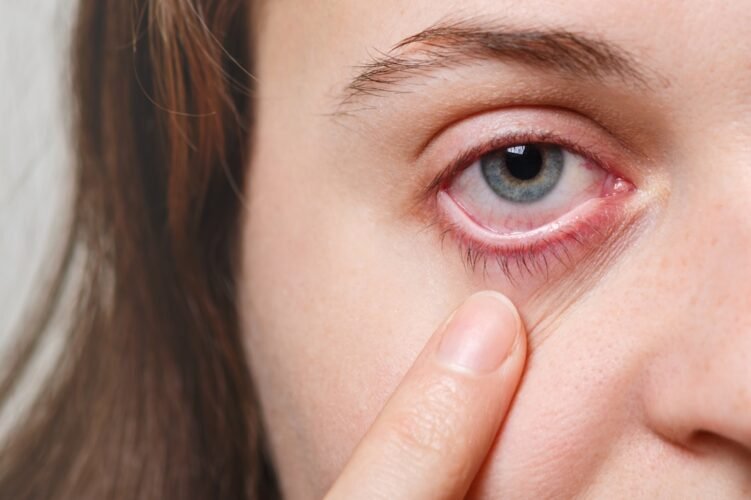
The symptoms of dry eye disease vary considerably from one patient to another, which is one reason the condition is so frequently misunderstood. The most commonly reported symptoms include a persistent stinging, burning, or scratchy sensation in the eyes, a feeling that something is lodged in the eye, and sensitivity to light or wind. Patients often notice that their vision fluctuates or becomes temporarily blurred during sustained reading or screen use, improving momentarily when they blink. Paradoxically, excessive tearing or watery eyes can also be a symptom of dry eye disease — the eye’s response to chronic surface irritation is a reflex overflow of tears that nonetheless lacks the stable, nourishing quality of a healthy tear film. If you regularly experience any of these symptoms, a clinical evaluation by a knowledgeable optometrist is the essential first step.
How Optometrists Diagnose Dry Eye Disease
Accurate diagnosis is the foundation of effective dry eye treatment, and a thorough clinical assessment goes well beyond simply asking about your symptoms. A dry eye evaluation typically includes measurement of tear production using Schirmer’s test or phenol red thread testing, assessment of tear film stability through tear break-up time analysis, and examination of the ocular surface for signs of staining or damage using fluorescein or lissamine green dyes. Meibomian gland imaging — using infrared meibography — allows your optometrist to directly visualize the structure of the glands responsible for the lipid layer of your tears, identifying atrophy or blockage that may be driving evaporative dry eye. Osmolarity testing measures the salt concentration of the tear film, a reliable biomarker for disease severity. This multi-faceted diagnostic approach ensures your treatment plan addresses the true underlying cause.
Professional Treatment Options for Dry Eyes
Once the type and severity of your dry eye disease have been established, your optometrist can recommend a targeted treatment strategy from a growing range of effective clinical options. For patients with mild to moderate aqueous-deficient dry eye, preservative-free artificial tears and prescription eye drops such as cyclosporine or lifitegrast — which address the inflammatory component of the disease — are commonly recommended. Meibomian gland dysfunction, the driver behind most evaporative dry eye cases, responds well to in-office treatments including thermal expression and eyelid massage to clear blocked glands, as well as intense pulsed light therapy, which reduces inflammation and improves gland function over a course of sessions. Punctal plugs, small biocompatible inserts placed in the tear drainage ducts, help retain natural tears on the eye’s surface for longer. Your optometrist will match the treatment approach precisely to your diagnosis.
The Role of Lifestyle and Environment in Dry Eye Management
Clinical treatment alone is rarely sufficient for long-term dry eye management — environmental and lifestyle factors play a significant role in both triggering and perpetuating the condition. Prolonged screen use dramatically reduces blink rate, leading to increased tear evaporation and worsening symptoms. Implementing the 20-20-20 rule — looking at something twenty feet away for twenty seconds every twenty minutes — helps reset your blink pattern during extended digital work. Staying well hydrated, increasing dietary omega-3 fatty acid intake through food or supplementation, and using a humidifier in dry indoor environments can all contribute meaningfully to symptom relief. Contact lens wearers may benefit from switching to daily disposables or lenses specifically designed for dry eye patients. Your optometrist will incorporate these practical adjustments into your overall management plan alongside any prescribed treatments.
When Dry Eyes Affect Your Vision Quality
Many patients are surprised to learn that dry eye disease can directly compromise the quality of their vision, even when their prescription is perfectly up to date. The tear film forms the very first refractive surface of the eye — meaning that an unstable or irregularly distributed tear layer distorts light before it even reaches the cornea. This produces the characteristic fluctuating blur that dry eye sufferers often notice during reading or sustained screen time, temporarily clearing with a blink before degrading again. In more advanced cases, chronic ocular surface damage caused by persistent dryness can lead to corneal scarring or irregular astigmatism that affects vision more permanently. Addressing dry eye disease is therefore not only about comfort — it is a direct investment in the optical clarity and long-term integrity of the most important refractive surface your eyes possess.
Final Thoughts
Dry eye disease is a chronic but highly manageable condition when it is properly diagnosed and treated by experienced optometric professionals. Living with persistent eye discomfort, fluctuating vision, and daily irritation is not something you should simply accept as normal. Effective, evidence-based solutions are available — and they are closer than you may think. Drs. J&K Gill & Associates provides compassionate, thorough dry eye care to patients across Mississauga, combining advanced diagnostic assessment with personalized treatment plans designed to deliver real, sustained relief. To learn more about dry eye solutions or to schedule a comprehensive evaluation, visit drgillsoffice.com. Clear, comfortable eyes are achievable — and the right optometric care makes all the difference.
Comments are closed, but trackbacks and pingbacks are open.